Frontier Tech Hub
A Fieldtrip to the Future for FCDO Nepal
An immersive 2036 information crisis that gave the whole embassy team a way to see how AI might change their work and where people still add the most value.
The challenge
It is hard to prepare for a future you cannot picture. When scenarios stay abstract, people tend to imagine a slightly modified version of today.
Through the Frontier Tech Hub, FCDO Nepal was keen to become a more digitally enabled embassy and to harness AI tools. As part of a wider strategy week we built a session that explored how AI could reshape embassy work by 2036 by letting the whole embassy live that future, challenge it and argue about it.
What was achieved
- Participants lived through a plausible 2036 and used it to judge where AI could help or harm embassy work.
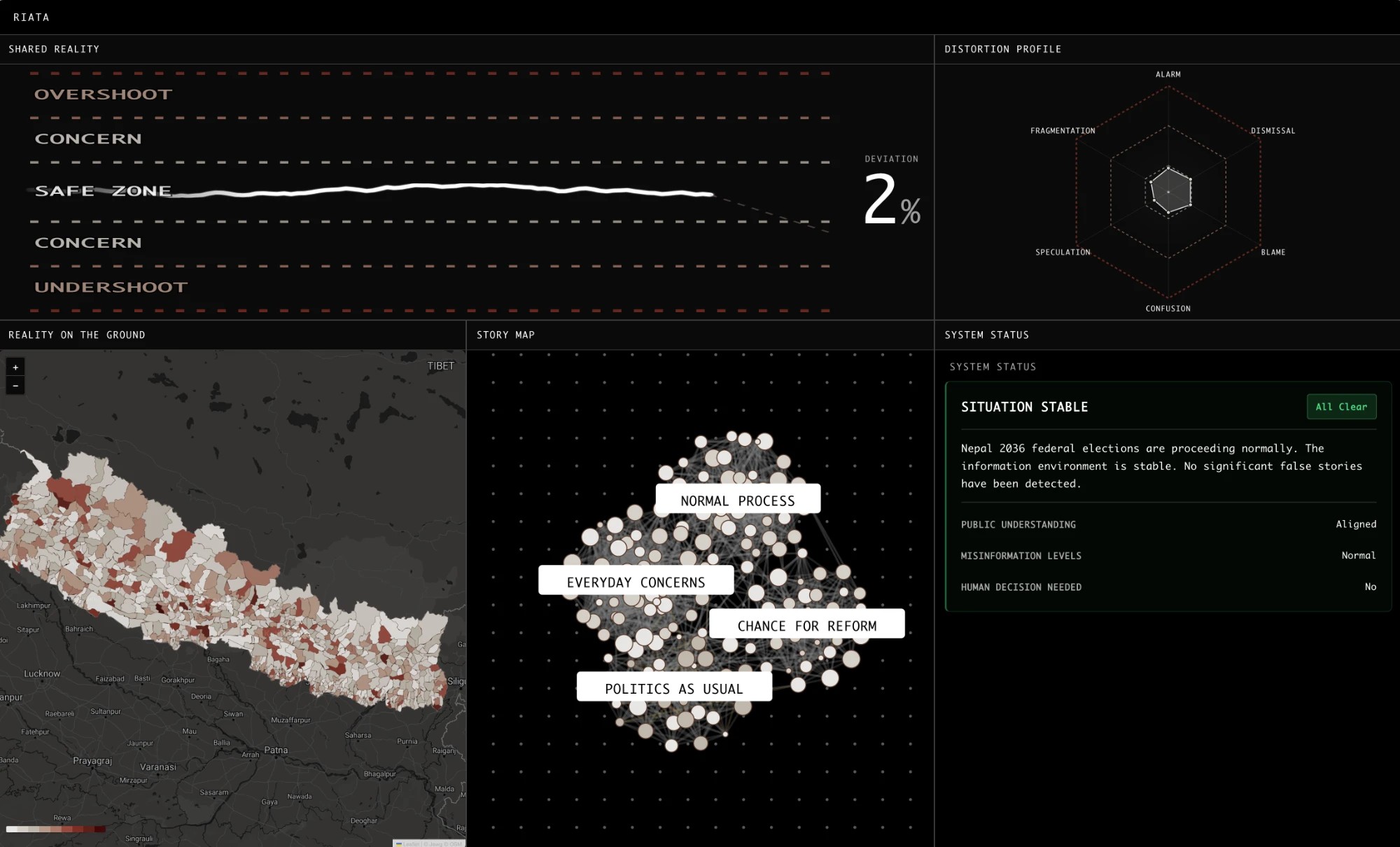
- Putting the consequences of each choice on a live dashboard gave the room something concrete to discuss.
- Generative AI let us create the artefacts quickly and make the future richer and more believable.
- The teams were able to experience what it feels like to compete for legitimacy against automated systems such as bots and make critical decisions to navigate a crisis involving the spread of mis- and dis-information.
“We went beyond just discussing the future – we stepped into it. The exercise helped us think about the distinctive value we add as humans representing our country overseas, how we can double down on that and automate the rest in our ambition towards becoming a digitally-enabled mission.”
How we did it
We use immersive stories, personas and artefacts from the future to make possible futures concrete enough to experience, question and debate. We then step back with participants to consider what those futures mean for decisions today.
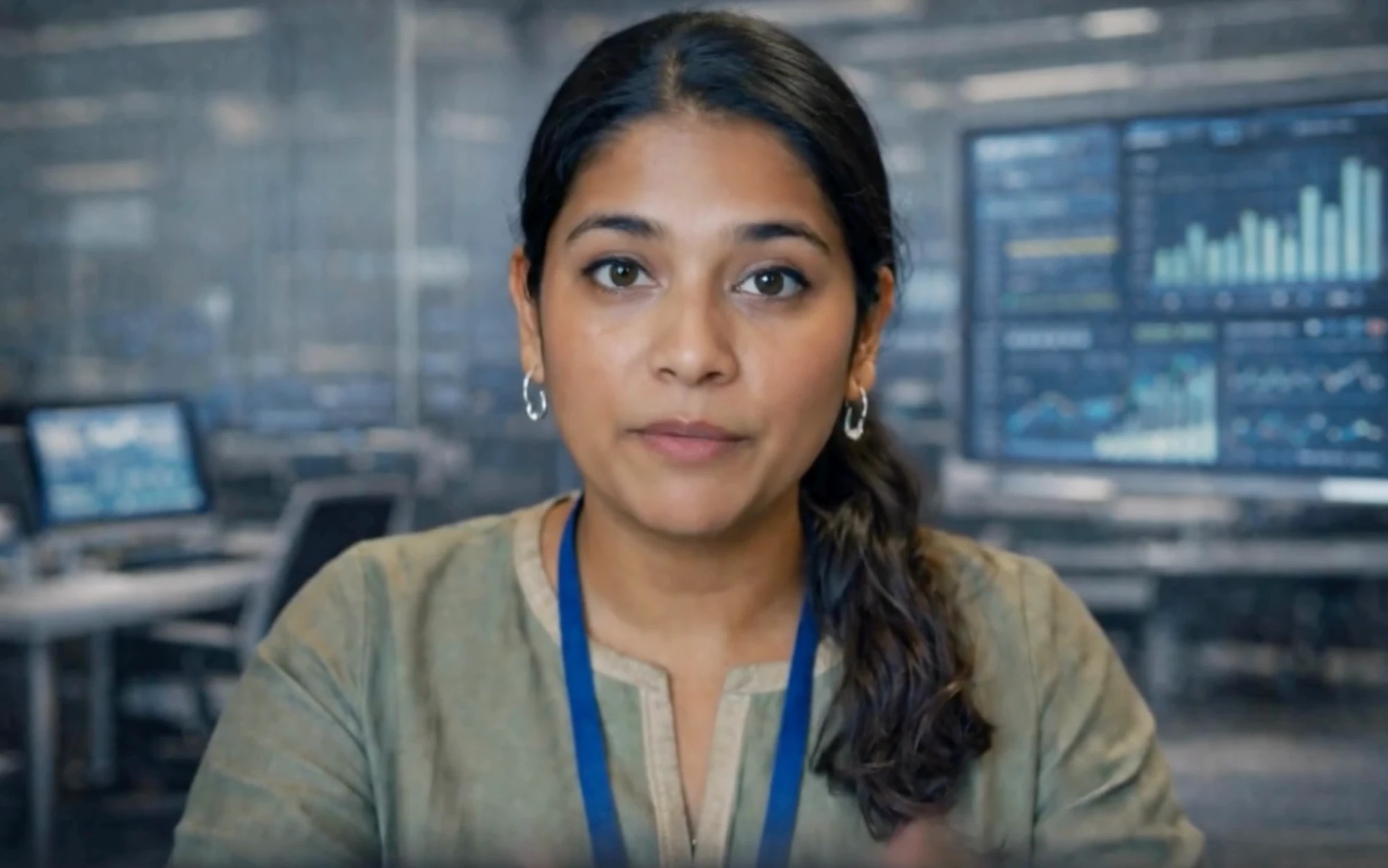
- Participants met Asha, a fictional embassy employee from 2036, brought to life as an AI-generated avatar.
- Asha placed them inside a fast-moving scenario during Nepal’s federal elections, with access to the information-monitoring system she relies on.
- Artefacts from the future, such as diplomatic communications and the digital tools embassy staff might use, helped participants weigh the opportunities, risks and choices emerging for their work.
- Participants made decisions on their mobile phones, and a visual dashboard responded in real time to show what their choices did.
- To close, we brought everyone back to the present to talk through what the scenario meant for the decisions they face now.