Frontier Tech Hub
Piloting a radical new platform for locust control in Kenya
Exploring whether drones could be used as a nimble, low-cost and environmentally friendlier complement to traditional locust control.
The challenge
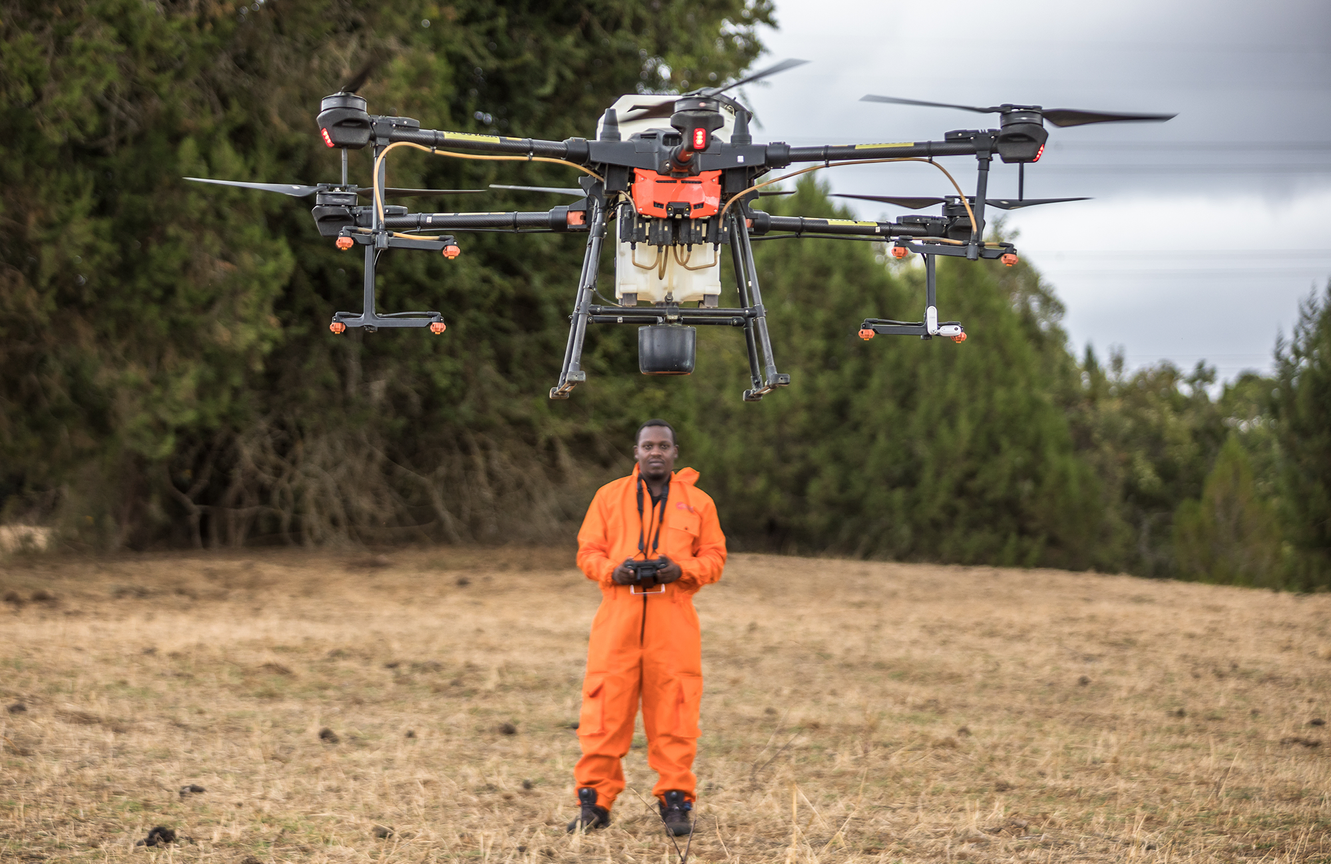
Between 2019 and 2021, East Africa experienced the worst locust crisis in decades, a threat that is likely to intensify as climate change drives more frequent and extreme weather fluctuations. Locusts devastated crops and pastureland across Kenya, Ethiopia and Somalia. But existing responses, such as hand-held, vehicle-mounted or aircraft spraying of pesticides, face real challenges in cost, reach and environmental risk.
This pilot explored whether drones could be used as a nimble, low-cost and environmentally friendlier complement to traditional locust control, particularly for early-stage outbreaks, hard-to-reach areas and smaller swarms.
What was achieved
- Spray efficiency was improved dramatically through ULV integration: the drone achieved FAO-standard 900ml/min spray rates, with reduced load weight doubling battery performance.
- Real-world spraying was validated, showing drones could reach small swarms and juvenile hoppers in locations inaccessible to planes or ground vehicles.
- Community acceptance was high, with field surveys indicating willingness to engage, particularly when biopesticides were used and drone operators were present on-site.
- The pilot contributed directly to FAO's new Locust Drone Advisory Group, with team members invited to share lessons and co-develop guidance for future drone use in surveillance and control.
- Wider spillover potential was identified, including the use of drones for mosquito control and broader agricultural applications, validating the role of this work in shaping Kenya's emerging drone ecosystem.
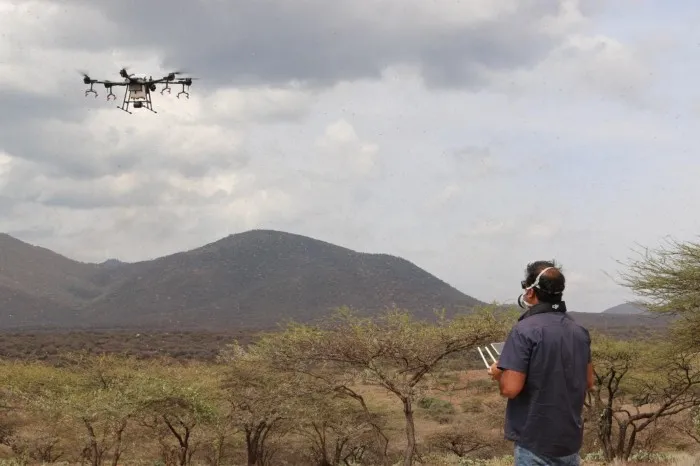

The drones can reach areas the existing methods cannot. It fills the gap in low cost control because when you have an inaccessible area where the aircraft, the vehicles and handheld sprayers cannot reach, you can use a drone.
How we did it
Through the Frontier Tech Hub, Brink supported FCDO pioneer Tristan Eagling, local drone operator Astral Aerial, and scientific partner CABI to develop and test a drone-based locust control method in real field conditions.
Brink's role focused on coaching across the full experimentation journey, supporting the team to iterate technical designs, engage communities and ecosystem stakeholders, document evidence, and develop system-level insights on the potential for scale and integration into formal response systems.
- Technical design and retrofitting. Brought together technical expertise to pivot to Ultra Low Volume (ULV) spraying, retrofitting DJI Agras drones to carry new nozzles sourced from the UK. This significantly improved battery life, droplet precision, and alignment with FAO guidance.
- Field testing and optimisation. Guided sprint-based testing of in-field response, drone spray rates, heights, wind effects, and payload configurations. Supported data collection with live locusts and artificial markers to validate coverage, mortality, and swath width.
- Storytelling and stakeholder engagement. Supported dissemination via workshops, conferences, and multimedia stories. Generated evidence that was taken up by the UN FAO and other actors.
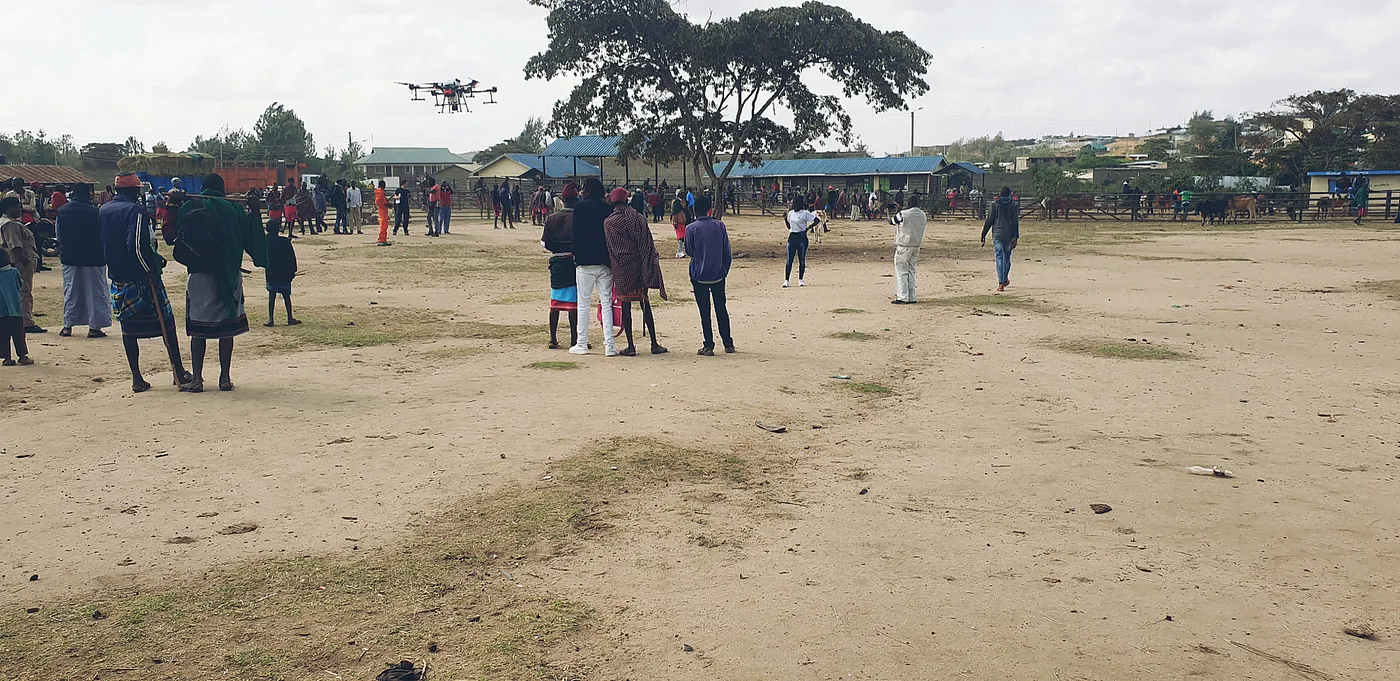
This pilot showed that drones can play a niche but valuable role in locust control: responding quickly to small or early-stage outbreaks, operating safely in populated or inaccessible areas, and reducing environmental risk through more targeted spraying. While uptake will likely depend on future funding, especially between swarming cycles, this work laid the foundations for future integration into national and international locust response systems.