Our methods

Futures

We’re called Brink because so much of our work begins with asking, ‘What are we on the brink of?’ So let’s talk about exploring the future and building the one we want.

The futures cone: from now, the future widens into possible, plausible and probable futures, with a preferable future overlapping the plausible and probable ones POSSIBLE PLAUSIBLE PROBABLE PREFERABLE NOW FUTURE

The futures cone

Canadian philosopher Charles Taylor sketched a “plausibility cone” in 1990, building on Norman Henchey’s earlier sorting of futures into possible, plausible and probable. In 1994 Trevor Hancock and Clement Bezold used the cone to show that sorting graphically and added preferable futures. Joseph Voros developed it for foresight practice from 2000, widening it to seven categories.

Source: tech4future.info

Nobody can predict the future, but there are useful ways of working out what may come next and then building a better future for us all.

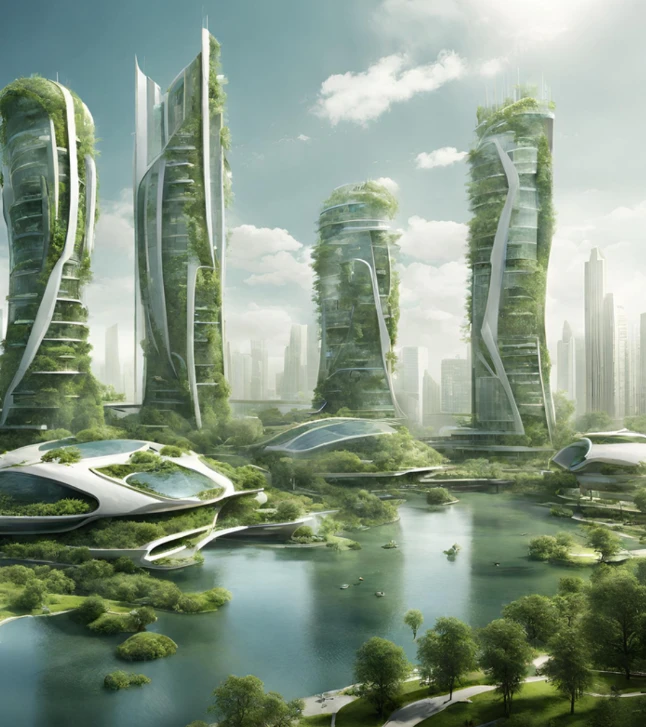
An imagined future city: green-covered towers rising beside a lake and parkland

The futures cone (pictured above) is a tool for sorting what might happen. Probable futures sit in the narrow middle, plausible ones around them and possible ones at the wide edge, with the future you would prefer somewhere inside.

Our work tends to focus in two of those areas:

  • Possible futures

    Mapping the changes that could be coming and what they would mean for you.

  • Preferable futures

    Settling on the future we want and starting to build it, beginning with what has to happen now.

Who we work with

We work with teams to explore what might be coming their way and understand what it means for them, as well as defining what a better future might look like and what it will take to make that vision a reality.

For people exploring possible futures

Explorers

For people who are looking at the shifting sands and wondering where to place their chips (whether that is staff time, resources or funds) to have the most impact.

Examples

You leave with

Recommendations, a roadmap and research questions to inform your programme.

For teams building better futures

Builders

For teams, organisations and funders looking to shift systems, including funds and labs that back what the future will need. Our Better Futures CoLabs begin by setting a shared goal, then work in concurrent portfolios and across systems to get there.

Examples

You leave with

A shared picture of the future you want and a coalition working towards it.

How we make it stick

We do this in behaviourally informed ways

We draw on a deep toolkit of strategic foresight methods, including horizon scanning, backcasting, visioning and experiential scenarios. If you are grappling with the imagination gap, navigational uncertainty or organisational inertia, we use them in ways designed to get you past those.

  1. The imagination gap

    Picturing a future that differs fundamentally from the present is tricky for everyone, because that’s not how our brains are wired.

    How we tackle it

    We make possible futures concrete, with personas, artefacts from the future and immersive sessions that give people the feeling of living there, so they make bold but informed leaps.

  2. Navigational uncertainty

    When evidence piles up faster than anyone can digest it and the experts disagree, a single forecast offers false comfort and a long list of possibilities offers none.

    How we tackle it

    Signals of change, expert interviews and workshops build the scenarios, then show which choices hold up across several futures and which questions are still unanswered.

  3. Organisational inertia

    Budgets, incentives and methods are usually built around the last crisis, so the pull of the present is strong even when the brief is to look ahead.

    How we tackle it

    We tie foresight to live decisions and leave behind embedded skills, guidebooks and tools, so your team keeps adapting as more evidence arrives.

If you want to explore how we can work together to shift systems, transform mindsets, and create new possibilities, we'd love to hear from you.

David Vigoureux, Innovation Manager at Brink

The best person to get in touch with is Innovation Manager, David Vigoureux. You can email him on dave@hellobrink.co.

Get in touch